Episode Transcript
Marshal Skills Discussion - 2026_03_08 15_58 EDT - Recording
===
[00:00:00]
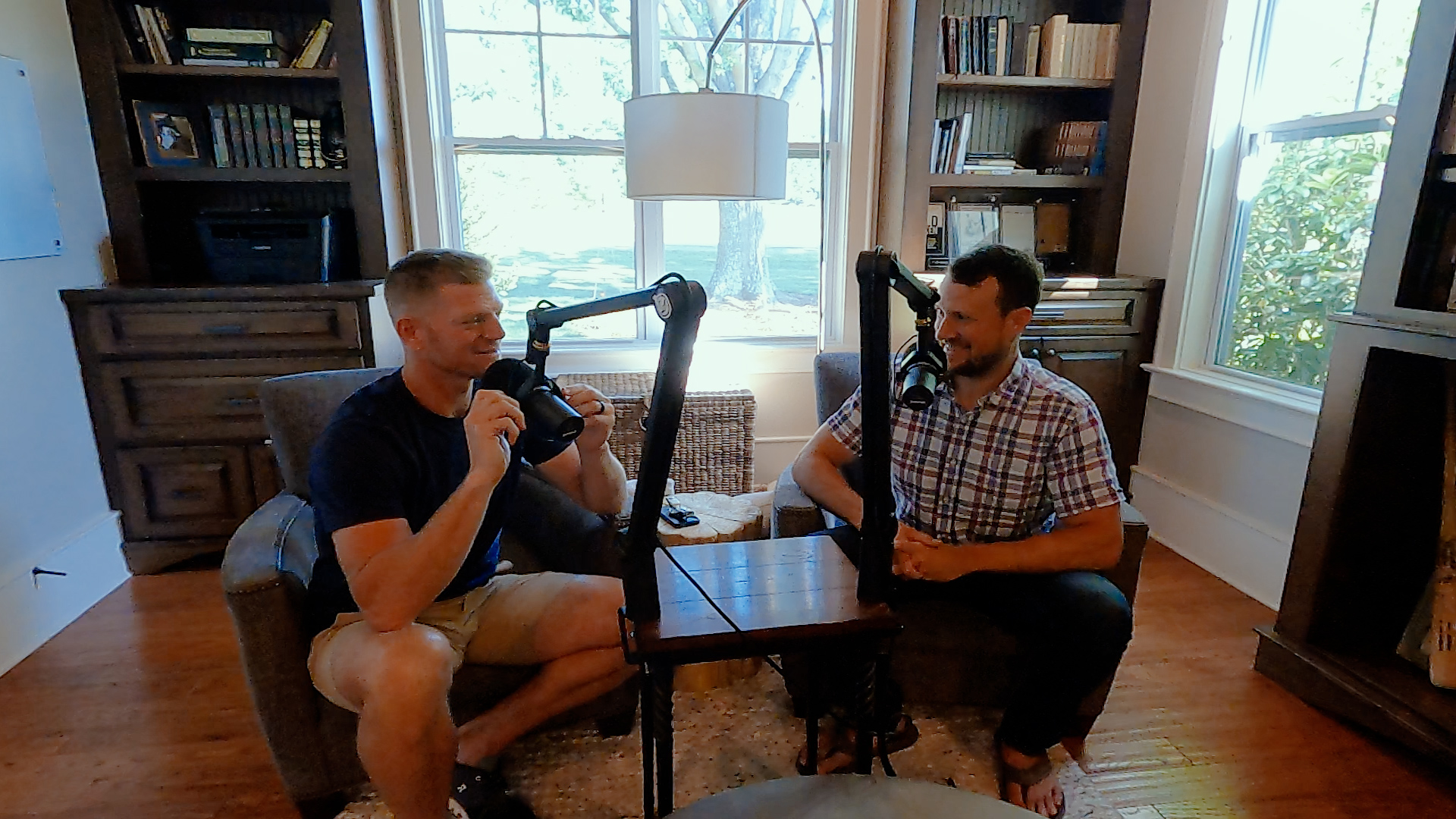
Nate: so what we wanted to talk about with the chat today, I asked Nate to come on his, I'll let him give his introduction, his bio, but he's Army Special Forces background and he has a really good theology of violence and kind of tactical household.
Some work that he's put together, but I thought he could share with us. And a couple things. One I think it's important to, so mar, so one of the things we just need to say, what are Marshall skills? What does that even mean? But I think they're fundamental to a man's basic duties. But a lot of times in our convenient, comfortable, first world society, we just don't have to do them anymore.
Like our ancestors a hundred years ago had no choice but to have al skills for the most part. Or they were, it was hard to survive. We're we've gotten soft as life has gotten easier and the world gets more convenient. So we have to practice them just like we have to practice anything, just like our daily scripture and prayer disciplines.
We need to practice. So how do you do that well and how do you integrate it into your life and like recognize where you're weak [00:01:00] and where you can grow and work on it. Another thing about to start kicking it off before I introduce Nate the first I'm reading two Swords of Christ right now, which is a great book by Raymond Ibrahim on the Templars and the Hospitals.
But he talks about in that book that the, there was actually theology on this topic and the early Templars used it. The first lead of the Templars I forget his name off the cuff here. I think it's alt. If I'm not, it's somebody like that somebody else on the chat might know.
But he actually wrote about it and how you have. A good theology of when to use your sword. And he talked about there being two swords of Christ. One is the word of God, which is our primary weapon, and that's the one we should always be reliant on at all times as Christians. But the second one is the real sword, your actual sword.
And the way he broke it down is that it's actually holy to use the sword in the destruction of the wicked who are also persecuting the church. And that was the Templars motto. [00:02:00] They're very pious in the way they live their lives. Of course, there's lots been written about the Templars, but if you read the original short, I think Raven Ibrahim's books are really excellent on this topic.
But they were really disciplined. They their theology was, you use the word of God to fight when you're in a Christian land dealing with. With the laws and such of that land, you don't just run around with your sword and start chopping people up that you disagree with, right?
We have freedom of speech, we have all these rights in our country, and we're supposed to fight with the word of God in a Christian nation. But when it comes to protecting the poor, the downtrodden, the Christians and other children and women and people that are being abused by wicked men in other nations that reject Christ, it is actually holy to use the sword under the proper authorities.
So I think that's an important distinction that we forget. We have the law of War in America, so we follow law of armed conflict and we use principles to guide our combat. So that we can stay [00:03:00] on in a position of virtue and fight from a moral position, not from a, I want to kill stuff and break things and steal from people positions.
So anyways, some interesting and important distinctions I think to bring out, but I'll pause there with that little introduction and then kick it over to Nate to introduce himself and lead us out.
Speaker 2: Yeah, that was a good lead in Nate. I think that ultimately the, all these people that are trying to hinder ice around the world or around the US and are demon are organizing particularly the. Somewhat overweight white women that are a part of this, obviously haven't traveled to the areas of the world that a lot of these illegal immigrants or undocumented people are.
And a lot of that the areas of the world that we went when we were in the military and deployed and saw the way that cultures, other cultures or third world [00:04:00] cul cultures organized themselves. In a lot of ways it's because they don't have Christian worldview at the core of their nation and the way that they govern themselves.
And as I look back at America's founding, I think the key thing that, that the founders understood as human natures. Capacity to sin, capacity to evil, and then trying to set up authority such that it can be checked. But as we see the government here in America be more and more dysfunctional and failing to exercise Romans 13, to bear the sword against evil doers.
The and the bureaucratic and dysfunctional nature of the police forces as we saw in like in Charlotte with a. A Ukrainian woman getting stabbed to death on a train. And these, if you're on X or any of these social media platforms that have a little bit less [00:05:00] regulation or throttling of stories, you're seeing a lot an uptick in violent acts against what you would say, innocent civilians by either foreign nationals that are here illegally or just morally debased citizens and people that have various lack of Christian morals and discipline.
And as we see. The government be less functional. I think it is important. It has always been important for a head of household to take the protection of his own family as a primary responsibility. So that is the protection can be a physical protection, but it's also a spiritual and an emotional protection.
So monitoring what kinds of things your family's watching, and who your family's hanging out with and what they're reading and what is coming in. So there's a very surreptitious, devious way that our [00:06:00] households can be compromised through the internet, through different forms of media.
And that is very much part of protecting the spiritual and emotional protection of your family in that way, but also the physical protection as you move from your home to the grocery store, to church to go out to eat. I think that the if we're gonna be as men of Viscar who understood the times, we're going to take much more seriously the role that we have as a protector.
And so as you move with your family and as you go places, and then even also understanding where you are geographically in the us. If you're in a place like DC where it is harder to have the means to protect those around you, and where the government is less constitutional, shall we say that the it, it may be harder, but that doesn't mean that you can't take precautions, that you can't understand where the time, and my [00:07:00] Jiujitsu instructor I was growing up, I, I did a Japanese form of juujitsu at a Baptist church starting when I was like 10 or 11.
It was two bucks. We threw it in the basket and we did two hours of juujitsu. And he always talked about how his grandma set The best defense is no be there. And so we read in Proverbs that the fool sees trouble and continues on. So I think that maybe that's the first thing. And even me as somebody who has a ton of training, I would prefer.
To not be there. I would prefer to see the trouble on the horizon, see and know what the state of things are, and to make sure just we're not even there. And we just avoid it. And I actually spoke to a lot of Christians around the Trump inauguration and the January 6th kind of thing that people had this kind of zeal for, Hey, I wanna take back this country I want, and I just feel like I need to go to DC.
And I said, don't do it. That is a, for [00:08:00] me, at the time I was saying, Hey, that's a clear best defense. It's no be there. Because this is gonna be a intersection of professional agitators on both sides, and a Christian man shouldn't go there. From where I sat, obviously there, there were very wise people that made the decision and had to reap what they sow there.
But that's just one example that pops into mind. I think another one would be on a road trip, you're you fill your gas up. When you're at half Tank because you're about to go to a, through a area that is a little bit more of a threat or you just don't wanna have to stop again that evening with your family, put yourself in a position of a gas station.
I, I actually pulled in, I was driving back from Charlotte late at night and I pulled into a gas station, a pretty built up part of town, but immediately started seeing ah, I don't know if I should be stopping at this gas station, or I should be very aware of where I am. And just actually didn't even have the family got get out, lock the car.
Kind of tried to control that situation. [00:09:00] So I think that's what we should be prudent and we should have character to just be like, I don't wanna. Be anywhere near it. It's better to just keep my family distant from it. And then I would say that's also probably there's a prescriptive there is to seek out a place for your family to live and a fellowship for your family that is more secure, that is more safe.
To, to realize that you can't do this by yourself. You have to be in a network of families. And I, if you look at Genesis 1414, we see Abraham's household has 318 trained men. And I think that the church in America more aptly represents how Abraham's household was array. There's hundreds of families doing things mutually together.
It's not the same comparison, but finding a church. Is with men that have skill and are serious about protecting their family and can provide this additional network to you. And that's even what we're trying to do with Iron [00:10:00] Tavern and the different groups where men are able to find other groups of men that are serious about building a tactical household, a household that essentially makes decisions on what's gonna happen in the future.
That's essentially the definition of tactical. And you're looking at. The future. You're looking at what's happening and you're making decisions based on that, not what's happening right in front of you. And I think that leads us to, to be well resourced. So you have money, extra money, you have extra margin with your paycheck to be able to spend money on something besides food and clothing.
To have money to buy weapons and bullets and to margin with your time to train on additional things. And this is a difficult thing because it's hard specifically when your government is inflating away the value of your currency faster than you can make it. And you can find yourself in these positions.
But ultimately, as a Christian, we should understand it's [00:11:00] gonna be hard and accept that. It's not gonna be easy, and that we're gonna have to work harder than other people. We're gonna have to, and then that's also where the network comes in to finding other men that are serious about this, that can help you gain the margin of time, the margin of money, to spend it in a way that allows you to buy stuff.
But then I would also say that we have people in our circles that spend way too much money and way too much time on those things. And I'm about to kick off a church. Security seminar, and I'm gonna open up with that. The most threat to a church, the biggest threat to a church and the biggest threat to you and your family is sin.
Because you have it in your household. You have it that you have to deal with it, and you have to violently confront your own sin. You have to confront the sin of the members of your family. And then a church and church leadership needs to be serious about confronting sin because a hundred percent chance that [00:12:00] there is sin inside your family, sin inside your church and continuing to not confront that and to not deal with it is danger to your soul.
But, so I think that there can be people that will really. Get fixated on the physical aspect and the guns and the jiujitsu and the lifting weights at to a detriment. And so there's the whole spectrum and you have to essentially be in prayer and understand and take be know yourself and take assessment of where you are and and then try to just improve.
I think that when we see the parable of the talents and taking it, we just, we need to make sure as men, we're not burying. Our talents that we're taking inventory, we're figuring out how to invest that. And so first and foremost, it's gonna be how we invest our time and our attention and what we put it towards.
And that is going to bring we're gonna, we're gonna reap what, how we sow our time, how we sow our attention, and how we put it towards that. And you're just gonna have to constantly be taking inventory of that. And [00:13:00] I think your wife is a really good sounding board for this too.
Doesn't necessarily mean that you always listen to her and give her a hundred percent veto power about whether you buy another gun or more ammo or not. But you should be like your wife should probably be very much in support. Of how much time and money you're spending on that. And she'll let you know maybe if you're getting off track a little bit there.
So just using her as a sounding board for that and even talking openly with her about how you're trying to do this. I've had a recent conversation when I'm, I'm going to the range and I'm facilitating more shooting with our church. It's like you're going to the range again. It's ah, I'm not going this time.
Guy from church is gonna run. I'm just helping set it up. And so I think that there, like I said, she's not driving that train, but we need to be we conducting ourselves in that area where she's excited about those initiatives that we're making is on board with it and we're leading the [00:14:00] family in that way.
But she can also be a good sounding board for that. I think that a lot of us can from specifically from, and I posted on the Iron Tavern, I posted on our church group and the tactical household kind of community that I run some videos from Matt Franka that, it's, there could be like this giant pile of crap on the internet as far as tactics and guns and stuff.
And he's one guy, he's actually sponsored by Tenor who's in the, our community church community, and they produce some pretty high quality stuff. And I post some links to that. I think that is very easy to be like I don't have a lot of ammo and I don't have access to a range and I don't have, but just really the basics.
We, we had a saying in our community that. That we master the basics. And so anybody who ever got to an elite level in special operations won was only ever a master of the basics. And when you put, 30 or 40 guys together that are masters of the basics, you have an elite [00:15:00] unit. And when you we as a church community, if we have many men that are mastering the basics spiritual disciplines, but also the physical disciplines and the Marshall Disciplines, then you have a dangerous church.
And we, where we are and in, the backyard of Fort Bragg, we have the benefit of probably having, 50 to a hundred million dollars worth of government trained individuals in the church. Which is not necessarily gonna be the way most churches are. But I would guess, would encourage to.
To network with some of those churches that have that organic government funded lethality within their body. Believers. And, I guess a pitch we're doing, we're about to do a 10 week church security course. If you go to evangelical Reformed Evangelical Seminary website, you can sign up for that.
That we're gonna have, I think five different people presenting over 10 weeks. And it's meant to be an overarching, summary of how to secure a church. [00:16:00] And we're gonna talk about medical, we're gonna talk about cyber. Probably do about five weeks of the tactical, practical kind of overview and things.
And I guess that's essentially the framework that I use. And then, don't count out going to conferences or training specifically looking for somebody who has the spiritual side of it. I can read this, I think I put it in the Iron Tavern kind of thing, but west Westminster longer catechism question 1 35.
And it is essentially the prescriptive. For the sixth commandment and what we're supposed to do in regards to the protection of life, and I guess it's the spiritual undergirding I think of the theology of violence. And it is very much, if you look at it, it's somebody that is a man that is governed and understands the [00:17:00] first actual proof text of Westminster Catechism.
Question 1 35 is dealing with your wife in an understanding way. And I think that is a key aspect. If you're getting road rage, that should be a little bit of an indicator that you may not be in a. A theological or doctrinal position to be good at security and be good at al disciplines.
If you're not able to govern your spirit and you are flying off the handle in traffic, then how are you gonna make the right decision in a violent situation resolving the church or your family? And you could, you can very much be in a position where you, we I saw a post recently about a guy who got shot.
Over a parking spot. And, I think that's the other side is being of best defense is no be there, is that the slightest little [00:18:00] uncontrolled speech, the acting like a hoodlum or a brien just for a second can have generational repercussions in a society that is morally debased and with, you don't know how this other person is gonna react.
And so understanding what back to that, best defense is no be there. And the best defense is potentially having a quiet and a gentle answer and ability to disengage this, in the last battle king Tian very quickly protects or rebukes Eustis. He says, peace euless quarreling is what a kitchen made does.
A Warrior's way is either courteous words or else hard knocks. So I think that ultimately we should be trying to con conduct ourselves in such a way that we're joyful and courteous all the way up until we shoot somebody and we flip the switch very quickly and we are leveraging surprise and we're always trying to deescalate the situation and [00:19:00] to break contact and move out.
And we, the very absolute last is gonna be the use of violence and everything else is gonna be using Christian character and discipline to deescalate and break contact. Quest question 1 35, what are the duties required in the sixth commandment? The duties required in the sixth commandment are a care, all careful studies and lawful endeavors to preserve the life of oneself and others by resisting all thoughts and purposes, subduing all passions and avoiding all occasions, temptations and practices, which tend to the unjust taking of life of any by just defense thereof against violence.
Patient bearing of the hand of God, quietness of mind, cheerful spirit, a sober use of meat, drink sleep, labor, and recreation by charitable thoughts, love, compassion, meekness, [00:20:00] gentleness, kindness, peaceable, mild, courteous speeches and behavior. Forbearance readiness to be reconciled, patient bearing and forgiving of injustices and requiring of good versus for evil.
Comforting suckering, the distressed and protecting and defending the innocent. So I just I go back to this question often, and if you look at the proof texts for that, those are the scriptures right there. So anytime, so go to, Westminster, Catholicism, 1 35 and and just start going through those scriptures right there.
And you can spend a month as a man studying those character attributes, those spiritual disciplines. And, it's one of the reasons why I. Am committed to my local church. I've been there almost 17 years now. A lot of the men that I've been there with were, have been there the whole time.
[00:21:00] There's been a lot that have come, but just being in Godly Fellowship with men that can speak truth to you and call you out and can see any kind of fluctuation in your character and how you conduct yourself and to be there to support you and encourage you we do, we try to do arranged day monthly but sometimes it's every other month.
And, I, what I say to them is, Hey, just find a group of people and some, whoever's the best, let that person train the others. So I think that we can wanna say, oh, we gotta. Hire this, $20,000 expert, but you probably have somebody in your church that is a couple years ahead of you that you can leverage and that you can discuss this with, and you can be humble and let them teach.
And it may not be the greatest, but just talk about how you can improve just a little bit, how you can corporately get better together. And then at some point it may make sense to bring in an outside expert or say, Hey, we're gonna send one guy to this this course, or We're gonna get this additional help from the [00:22:00] outside.
But the military's really guilty of it too is trying to hire kind of these outside experts when we have guys in the teams that have skills in these areas. So I would, encourage you to find who that is in your current network that is a couple levels above you and see if they'll be willing to help you make practice.
And then, it's just like lifting weights. None of us would go and think, okay, if I lift four hours a day, five days a week I'm gonna that's the best way to increase your bench press max. We know this about weights, we know that, but we'll think about a lot of other disciplines.
We'll just forget that and we'll think, oh, if we can just, do a blitz and I think that's what, those conferences or those seminars or those training courses can be great. Oh, I'm gonna go do this intense. Three day advanced training where you could easily just do 10 reps of dry firing every morning, and, I'm a big fan of James Clear, and he talks about your [00:23:00] environment.
So if you're, if there's something that you do really well, he talks is a habit stacking or habit chaining. So I'm not gonna miss my coffee in the morning. That's pretty much a liturgy that's like in stone for me. So if I want to do dry firing every day, maybe I stick a pistol on top of the coffee maker and I do 10 dry fires before I brew my coffee, or I want to, I need to make sure I read a psalm, I stick a Bible on top of the coffee maker, and then, from for long you got a pistol and a bible, and night vision and thermals, and a claymore and all that kind of stuff stacked on top of your coffee maker, that you're practicing with.
I just would encourage you to, the don't have this. Image of perfection in this. I'm gonna do this. And, another book I think it's called Finish by John Akos the one way that you stay in control of outcomes is to never start. So in your mind, you can think, oh, I'm gonna be the greatest shooter and I'm gonna, I'm gonna go to these conferences.
I'm gonna get the best gun. I'm gonna get a trigger job done. I'm gonna get a red.site on it. I'm gonna, I'm gonna, [00:24:00] I'm gonna, I'm gonna, you have this perfect execution of what you're gonna do in your mind, and then you never do it. The best time to plant a tree was 20 years ago, and the second best time today it's with discipline, it's the same thing.
So figure out just a very small, manageable way that you can improve a al skill. And in five minutes or two minutes, or 10 reps of dry fire or something like that. And then just try to commit to do that. I think that's essentially what this whole challenge is about. In talking about every week, adding one small thing.
And so let it, watch those YouTubes and try to just do 10, 10 dry fires. And there's ways to just improve gradually and over time and with consistency. And so that will be the way that I advocate for that versus the advanced side of things. I don't know.
Do you guys have questions? Or Nate, you want to try to
Nate: yeah, no, that's great. Thanks Nate. Now also you need to give your quick [00:25:00] bio just what you're doing now and where you came from on the Army side.
Speaker 2: Oh yeah. Yeah. I guess everybody's who the heck is this guy and why should I even listen to him this entire time I'm talking?
Yeah. So I did 14 years in the Army. I started out in Rangers and moved into special forces at Fort Bragg about halfway through my career. And did 12 combat deployments overseas various locations and pretty much always in a, direct action shooter type role. And I got out in 2016 and my oldest was.
Was seven years old and I had seven more years to go at the time before I could, get that retirement and be finished. Essentially, and I was just where God had me at the time. I was, I felt like it was time to, to be done. And so I got out of the military and I, I started a construction business and we've had done a decent amount of real estate projects, personal projects as well.
I have a podcast called Life On Target that I [00:26:00] do I did it weekly for about. Two years or so. And then I realized I was building our house that we're still working on here, and my family was living in a bus and I was like, I really probably shouldn't be editing a podcast at midnight or 2:00 AM while my family's sleeping in a bus while my house is partially built.
So it's e it's very infrequent now. Probably monthly. Every other month I'll drop something and I still like to like that medium a lot. I think it's pretty cool to be able to have conversations that I had with wise men, three or four years ago still getting multiple downloads.
And so the conversation continues to serve people and serve, the people that I've interviewed. And so yeah, a lot of, probably about half are I'm interviewing some man that I want. To replicate something that he's doing in his life somewhere ahead of me and having discussions.
Yeah I, I still talk about, I think I don't see a lot of Christians talking about violence in a balanced way. I don't I do see [00:27:00] Christians talking about violence sometimes, but I, it very much gives the puffed up and the bravado that is, is sometimes, like I talk about people, if any of you have had the privilege to hang out with high level UFC fighters or martial arts practitioners, they're the nicest people and the calmest people and just really cool for the most part in, in, in normal settings.
And they have a meekness about them, which is. One of the definitions I heard is having a sword, knowing how to use it and leaving it sheathed. And that's meekness. So if you don't have a sword and you don't know how to use it, and you're not meek, you're weak. So having the ability to conduct be violent, having a gun, knowing how to use it.
And not even pulling it out. Not even using it, and just calmly deescalating the situation the entire time, knowing that you could just shoot 'em in 0.8 second draw whether or not your suit coat gets [00:28:00] hung up on the sweep or not, so that ultimately, I think we need a lot more meek Christians in the sense that have a tremendous capacity for violence, but also have just the, they cultivate all those traits we talked about and we get better.
My, my daily business is construction and view the talking about al discipline and the the violence and the gun training and stuff to be a ministry. Because as, as lucrative as maybe the tactical business is, it's very hard to be the construction business profits.
And so I try to do that. The training, the guns and the things out of margin that I have. And Sunday afternoons is a great time to do this kind of stuff and to pour into this. So anyway I still I think that the churches, the early church that was always living under the threat of Islam coming in and killing all their members and or their male members and then raping the women and children on the altar this is [00:29:00] not, this has happened in history.
And that's, reading Raven Raymond Ibrahim's books is very I think helpful to frame yourself to say that this conflict that is maybe not necessarily so hot within the American borders, is becoming more hot. And so to look back and say, how has Islam conducted itself before in history?
And so I think that we need to acknowledge that this is this I actually I saw I gotta pull this up. As a guy in my church, I think it fits perfectly. He screenshotted this tweet and sent it out to everybody. A fun fact, we're at war this morning because Abraham obeyed Sarah and slept with their servant girl.
Acknowledging that this conflict goes back, thousands and thousands of years, the root of that. Conflict is sin. The enemy is always the evil one and the sin that and the counterfeit that the devil is trying to dangle in [00:30:00] front of all of us, even Christians.
But to acknowledge these other ways of life are fundamentally demonic and seek to destroy image bearers of Christ in any way, shape or form. And so we have to acknowledge that we have to. I think as I see the church and government being less. Effective the way that this gets fixed is at the family level and tens of thousands of Christian men taking dominion over their own sin and their own heart and their own spirit, but then also channeling their time, attention, and treasure torts becoming more dangerous and getting and linking up with more and more churches.
Not to, because we're trying to launch a crusade necessarily, but because we're trying to preserve and defend a physical space on earth that we can raise children, plant gardens, and educate our children to love the Lord and [00:31:00] worship them. And if anybody. Tries to, to come inside the border, to attack that what we're protecting, where we have the means and the capacity to protect and defend that and the willingness to die and go to jail for life to protect it.
And in some sense, like I, I said that as a Christian man oversees the rules of engagement. That the, now Department of War attorney gave me never. Again, governed how I acted on the battlefield. Ultimately, my Christian, understanding that every man is an image bearer, however, marred by sin and death, and that me to take a life is to essentially end and actually a range, a meeting that there may be not, ready for, but unlike John Piper, I readily arranged it on the field of battle and realized that I was there as a person in the government ready to bear the sword against the unjust. And it the same being true if you try to come inside the border of my family and my household. [00:32:00] If you want to declare war as a king, I will defend my kingdom with force if need be.
And ultimately if I if I have to spend time in prison, but I know my entire family is alive because of that I'm willing to accept that. Although, thankfully the way that American jurisprudence is that you generally have that right and privilege as a citizen.
If you are truly trying to defend and are as deescalating and not seeking to inflame the situation, generally, legally, that works out in your benefit. So anyway.
Nate: That's really good, Nate, thanks. I just wanna say a couple things real quick. That, that you've hit on a lot. And that's covenantal. So there's some really, I think, some really important things that go into this concept.
Marshall Skills as a broad, big picture, what is that even about? Like Nate said, I think it's about one of the disciplines that as godly men we should be teaching ourselves and learning. There's many ways to do it. So we're talking about for a second the topic of this [00:33:00] week, and then I'll shift.
So I wanna talk about the covenants associated with this thing. 'cause Nate said all over it. So this from the topic standpoint, practically speaking, I think you should be generally athletic enough to be able to do, move your body, move in the world, in the environment around you, defend your family, not be completely, helpless in the sense of if someone was physically trying to assault your spouse, your child, how, you need to defend them.
So there's that basic thing. I think that's as simple as go take a self-defense class with your kids or your wife, you can go all the way to a
Speaker 2: good litmus test too, is if you have small children and you're throwing them around for longer than, 90 seconds or so, and then you have to go sit down because you're about to pass out.
You may not be ready to protect your family. So generally these skills allow you to throw your kids up in the air and to wrestle on the trampoline and to not tear your ACL or your the second that you're doing it. These are. Generally good things for other parts of life too. Not [00:34:00] just because you want to rage a crusade.
Nate: Yes, all good. And so do that. Do be outdoors. Do things that are physical with your kids, with your spouse, with yourself, if you're not married yet. And be outdoors so that you can d defend yourself. I think the minimum standard is some sort of self-defense education and probably, the max standard is, if you're passionate about it, then go be a black belt and jiu-jitsu.
But somewhere in the middle you can also incorporate those things into your family's battle rhythm. So you're also doing the same thing with your kids. They're learning, wrestling or they're learning, they're doing a tough physical sport so they can actually play and be physical themselves in some capacity.
Those are important things for their growth. Not everybody's gonna be a, an athlete, but that's okay. At least have some basics so you can defend yourself. On the other side, there's like just simple weapons, right? I think you should have as a man, ways to defend yourself. Nate said, my intention would be to never use those things, but I have them and I know how to use them if I have to.
And I think that's just part of the professional manliness that we should try to teach ourselves in our sons [00:35:00] especially. And so that could mean anything from, you need to own a decent knife. That's just a tool, right? Where you can, you could use it to defend yourself if you had to.
Ideally not. 'cause knife fighting is no fun. But at least you've got a tool. So you need a, you need one of those. I think it's some people have batons as a way to defend themselves. I think that's more of a law enforcement minded thing. My thing is, if I'm gonna fight somebody, I'm gonna, I'm gonna subdue them.
I'm not going to just have, a way to just have a battle, like a, not gonna go to a gang war with a baseball bat. Like I'm gonna take an unfair advantage to the fight if I fight at all. And if ideally, I don't have to fight at all. But if I do, I'm gonna, I'm gonna win the fight immediately.
Not gonna be a delay or a struggle. You only get caught in those situations when you're not prepared and you're not in a bad place at the ba at the wrong time. Which you can also try to avoid. And then too, I think everybody should have a gun. It's your second amendment and it's the tool of warfare.
You know it men of the fighting. Type. If they were authorized by their government, they [00:36:00] had a sword and they, or they had a spear, or they had a pike, or they had their weapon of war, their battle ax. Those are tools and and weapons. And I think every man should have a gun. If you're like what gun do I get?
I think starting with the pistols, why, I'll let Nate talk about this a little bit, but I think you should have one of each. I think you should have a rifle, a pistol, and a shotgun, and you should know how to use them to a general basic level and know what their purpose is for and when to use them. So if that's an excuse for you to go get a couple guns, great, but start with one If you don't have any or if you haven't used them that much, pick something simple, very basic.
Doesn't have to be the fanciest thing and learn how to use it. Learn how to learn the five basic rules of firearms. I drill those and I don't ever compromise regardless of how much shooting training I've done. I don't ever compromise with reviewing them every time I'm using a live weapon.
I don't like to keep a round in my chamber because it just affords an opportunity for an accident if I can't. That's my view. Some guys are very adamant about you have to be round in the chamber if you're carrying. My thought is I can draw and and load around in a [00:37:00] very small amount of time and I can do that in one motion and shoot it accurately.
So I'm not worried about the extra risk to me of keeping a round in the chamber. I think especially important for people that with less experience with a weapon 'cause you wanna be, it's, you have to separate the pride, coolness aspect from the practicalities of how you're using that tool. Anyway, so that's just a couple things.
I think those are some of the basics of Marshall skills. You just need to be able to handle yourself well and be prepared to do it. And if you haven't done any training on it, I recommend you go set that up with your family and make it a fun event and do something so that you're preparing yourself at least in some capacity.
Just like we read our word or. Pray like we can do a little bit to prepare, just like we educate ourselves, educating ourselves on the Marshall skills. And I say that because in our society we've tried to create these efficiencies because of how blessed we are in America, in a first world country in society.
We've put all our kids in public schools, we've farmed out all security to the police. We have given all responsibility to government over to those dudes that we vote for once every four [00:38:00] years and that might or might not do their job. And what it, what this is covenantal and it's the idea of taking back ownership and responsibility as the role, as the head of the house, as the man.
And so that's what I think Marshall Skills is recognizing that we are the covenantal responsible person for our family. Just like Nate said at the beginning, and advocating that. Responsibility to someone else is a sin in a way it certainly can become sin, if not just benign, ineffectiveness.
And that is something, a way to view it where it's like, Hey, I, yes, I'm going to call the police if somebody breaks into my house, but that's, I'm not gonna fall on the floor and wait for the police to show up and do something about it. There's a difference there of operating under the proper authority, but taking a mental note and ownership of our responsibilities as men, both for our discipline, our spiritual growth, our children's education making those deliberate choices, not just doing whatever happens to us in, watching our favorite TV show and advocating all [00:39:00] responsibility.
That's part of the work that the curse of sin gave to us from the garden that we are responsible to fulfill in living Christ's purposes and building his kingdom. So I just wanna talk about that, and that's really important when you talk about government authority, church authority. And family authority, excuse me.
Those three kingdoms are the realms of responsibility that we need to be operating under in a healthy way, supporting and upholding a righteous government encouraging and building and helping flourish the local church under a different set of authorities. And then our family, government, running that family government with love, patience as a leader and taking care of our family in every way.
And I think you can incorporate the kids into that and your spouse and it becomes a bit, a building together effort versus a, I'm gonna go off and do my own thing and, shoot guns effort. It's not about that. That is a piece of it, that's part of training, but that authority principles are really important to where it's proper to both train for violence and [00:40:00] then also when to use the violence in appropriate in an inappropriate manner.
I'll pause there and Nate or anybody else, if you guys have. Questions you wanna bring up? I think this is a great opportunity to do that.
Speaker 2: I did, I do think ally too, and this is a conversation that I'm having with men at our church is it's on us too to raise our sons that way. So it, I, one of the, I saw my kids all the time.
We go, shoot, it's such a blessing to be able to go shoot with my sons and daughters because every time with the military, I had to go, I was away. And if I was on the range, I was not with them. And so now setting up your life and say, Hey, just with everything. And that's, it's, that's one of the reasons why we homeschool is I get to take my kids along with me when I do business.
I take them with me when I go to the range. They're down there at the range when the churchmen are shooting and they're getting reps in and they're doing it alongside. And also just generally specific girls as well, but [00:41:00] boys. That's why we have to cultivate grit in them. And that's why when our boys whine when something is physically hard, we should be crushing that, graciously crushing that.
And so the speech that I give my sons I don't have to give the 13-year-old and the 17-year-old that much, but I do have to tell the 10-year-old this quite often, the serpent wants your soul and the souls of your children. The dragon wants to kill you. The dragon wants to kill your offspring, and that weakness is going to create a opportunity for him to kill you and your offspring.
And the serpent is there. He is a roaring lion seeking whom he may devour. And to talk about that struggle, the, from the beginning of time that exists between the seed of Adam and the serpent and them to understand that this is not a world that's going to coddle you and to keep you safe. That that essentially out there.
Is dangerous and out there wants to kill [00:42:00] you and kill your children and to steal your birthright. That is what is, that comes as a chosen man of God. And this weakness and this whis and this inability to do something hard is the seeds that are sown towards that demise of you and your household.
And so just it's, it can be, I think we wanna. Coddle our kids potentially. But I think we just, we need to equip them for the fight. We need to be talking about the fight with them, and we need them to understand that and in not a way that makes them, paranoid in their bed at night. Because ultimately I'm protecting them.
I'm providing that, but them to understand that this fight is spiritual, that this fight is eternal, and that the physical weakness is actually part of this. We're not gonna be gnostic here. We're not gonna oversize this like the, ultimately yes, our weapons are spiritual. The battle is against principalities.
We ultimately, I would way rather a legion of angels show up and have this [00:43:00] fight for me instead of me having to pull out my Glock. But that is also maybe required. The spiritual war may be physical may, I may have to actually use the means this way and making sure my sons, are doing that as well.
And taking them with you to the classes, having them participate in working out in the martial arts it's very important that they have that mindset. And that you make time for that and including them in it is how. Is more sustainable because it's now a family activity. It's now time that you're sewing into your sons and your daughters and building these skills and capacities too.
I think also we have a joke. We've talked about it, we want to raise daughters that know tent pegs are multipurpose. So having your daughters having an understanding of how to use weapons and, understanding like ultimately if you have to use it something has gone wrong.
But, there have been times where the enemy gets inside the wire [00:44:00] and we want our women prepared to, to do that as well. But I'm a big fan of equipping them to use the means to gain a significant advantage versus them doing juujitsu generally.
Nate: That's good. I wanna be respectful of everyone's time.
I know Nate, I don't know how long you can go, but We'll I'll stay on as long as you guys would like to chat today. But we've got about 10 minutes for the hours up and then but I wanna open up to questions. There's a lot more we could talk about this topic, but I wanna just give a little bit of the background as to how these framework of ideas fit together and then just hear from you guys.
I'll put out the task for this week. The goal is essentially gonna be to, to research, spend some time thinking and researching where you are lacking in martial skills and then develop a plan to kill the enemy. It takes some time to put together, Hey here's where I think I need to grow, or here's the things I don't know and I need to do something about it.
Do a little research this week if it's go sign up for a class with your wife and kids, or if it's make a plan to buy a Glock, whatever that is. Figure out where you're lacking, where's the [00:45:00] local range? What are the rules to get on the range? Have you passed the basic safety stuff to do that?
Make a plan this week. That'll be the goal. And then I will try to set up for our local community and then the other guys who are at different church communities. You're welcome to take lead on setting up something for your men in your area. Let's go do a range day with the men of a higher caliber who can help give you a little bit of coaching, maybe teach a little bit about kit management and weapons management and the combat mindset and environment.
And we'll do that locally here over sometime over the next month or two. But I'll stop there. And Nate, any, or actually, let's open up to questions.
Nathan Spearing: I did also put the, three Guns Every Dad should Own, which is a free PDF download that I put out in the chat. I think you can see that. So that's just a good resource. Talks a little bit about Kit and the order that you should buy the equipment. And then I put a link to Tactical Household, which is basically a school community that I have.
I have, that three Guns Guide is in that [00:46:00] community. There's also a basic pistol force that I've started to put together. It's got, it's not complete yet, but it has some of the dry fire, the how to present the pistol, how to build your grip, and I have some stuff in there as well, and I'll continue.
That's the, where I'm putting out stuff as I have time to work on it. Has a tactical household framework about, 'cause there's also the, having food, having ability to, generate power and, and disasters and things like that. I think we can, those are other things that we can do as well.
Tactical household. And then the three guns guide that you can download for free as well to help as you do that
One of the guys on the call asked a really good question. He said that I'm a gun omer. I, uh, got weapons secured in my home. I've got kids I don't carry at church right now because of the logistics of his kids being, uh, crawling on him and stuff. He's on board with defending the family and his home. But his question was, are the, [00:47:00] their situations.
Talking about taking up arms isn't the right place. Specifically starting with seeing a spiritual, uh, persecution of the country, Christians being targeted, freedoms being stripped. Do we fight back? Um, because he looks at scripture and he sees Jesus talking about turning the other cheek. He sees disciples being martyred and he doesn't see them picking up weapons to defend themselves.
So his question is where, uh, where's the line?
Speaker 2: Yeah, I think I think that there are definitely times, and I think this is maybe one of the fundamental conversations that I have with God about is ha being somebody that has this capacity to please just give me wisdom if I'm supposed to be martyred, because my tendency, the easy thing will be to fight, will be to, run.
And to do that, to say I would say that my [00:48:00] own personal framework is if it's me that's gonna get martyred.
That's one thing. But I will not let somebody kill my family. So I am required to protect my wife and kids, and I it, spiritual persecution and coming and arresting us and rounding us up.
That's a pretty right now that's several orders of magnitude into the problem right now is if we look at the whole history of the church, very viable. But I would say that also we should be careful to say Jesus was martyred, therefore all of us should be martyred like he was. Sure. And I know you're not saying that, but I think that generally the church say Jesus's purpose on earth was to die, and him fighting that and avoiding it and not going and his disciples actually were trying, don't go.
To Jerusalem. If you do, this is gonna happen. And that was a case where he saw what was gonna happen and he continued on because that was his mission. But I think [00:49:00] that we can say, okay, Jesus died. That was his call. That is not and I am supposed to die to my sin. I'm supposed to die to my wife and children.
My desires are below them and I'm supposed to actually lay my life down for my wife, like Christ laid his wife down. But I think that. We stretch that and we make that martyrdom thing is that's the blanket thing. And specifically the turn the other cheek. I've done a little bit of study in that, but if you look at that, that turning the other cheek is about insults.
It's not about physical violence against you. So the actual way that in the eastern culture, they would slap you. And so essentially that was like the most public insulting thing that a man could do to another man was to slap 'em and around where. And so essentially say, Hey, if somebody insults you.
Let them insult you again and [00:50:00] that was not him physically assaulting, but it was essentially an insult. So say, Hey, you should be willing to be insulted, publicly insulted, and to bear insult and to get insulted again. And that's essentially what I'm talking about too is like even in a sense, like somebody could slap and somebody could say something or somebody could bump into you.
That's obviously clearly across the line, but this is not something that you'd be like, oh, I've been training for this and you're gonna gun this guy down that. Does a heavy shoulder on you, in, in the crowd or whatever. So I think that that is is important, but ultimately that's why we wanna be in the church, and that's why we wanna be praying, because that is, that tension between martyrdom and protecting our family is we're only way that we can hope to know in that specific instance.
And we can be confident as if we're men of prayer. We are men that are under spiritual submission in the church where we are g laying our life down for our wife and our children for the church and cultivating this godliness so that we can be confident of what that, but [00:51:00] I think that the, I would say that probably 80, 90% of the church is growing off into that.
We should all be martyred, we should let people be physically violent to us. And I know, but essentially that's how I basically. Generally, if I'm gonna die and I'm gonna lay my life down, I'll make that choice individual choice for myself. And I pray the Lord gives me wisdom to do that. But if I am not gonna say, alright, wife and kids, like all y'all are gonna get martyred here and we just need to turn the other cheek while the Muslim, or, and so I think that.
Again, we can't it's a tension and there's so many tensions in the Christian faith, and the only way that we can hope to know that is if we're cultivating godly virtue in absolutely every area of our life and constantly in prayer that the Holy Spirit would indwell us in our actions.
It would drive our decisions so that we can be confident about that and make the decision. 'cause ultimately that's the hard one for [00:52:00] sure.
Nate: There, there's multiple examples of this from history, right? That I think we can look at too.
Ultimately I think authority is a really important question in that decision because if you're talking about a person shows up in your church, starts shooting, or you're on the street and a person starts shooting, people, that person has stepped outside the bounds of lawful authority,
therefore, they can be engaged outside the normal bounds of authority, and you're defending life. And so in those instances, I would have zero hesitation in defending life. But if you're like, you've talked about it. If you're going looking for it, that's wrong. If you're, I think just 'cause your rights are infringed doesn't necessarily mean that you're authorized to go take life.
Think about all the Christians and all these other countries that are currently being persecuted. The early church in Rome, just taken by the thousands into the arena and butchered, they. They fought with the weapon of the word and they stood on their principles and they were willing to die for them.
And I think we have to be ready to do that same thing. [00:53:00] But in under proper governmental authority to go destroy the wicked David and his mighty men. They were under the authority of God's direction to go rid the world of these pagan idiots and also under kingship authority. So I think it really does come down to an authority question and where you are at.
And ultimately you have to be willing to lay down your life, but you also have to be willing to defend your family. And Nate said, don't be at the bad place. It's the best defense. If that's happening, I'm moving my family out. I'm not gonna stay and be like, ah, not on my dead hands or whatever, anyway, those are really important questions though.
Speaker 2: I would also want to say, Hey, like I don't carry at church 'cause I have people, climbing on me and stuff. I would encourage you. Back to even not having one in the chamber, having it in your bag, having it in the car, having it like, and I'm not, I'm, this is just a little, like, when we talk about this at our church I basically have told everybody, Hey, I want you carrying, I want you bringing the, because there's essentially from leaving [00:54:00] the church, you're in this corporate kind of role, but then you're moving to your car and in some churches are in inner city, you're walking with your family down the street, whatever.
Like that transition from the corporate role to the, in the now head of my household role and being able to be able to have the tools you need when you make that transition. And then I basically said, Hey, my, when we train as a church and as men in the church, we're trying to increase our each individual household's capacity to protect itself.
And then some of you, just like some of you are elders and deacons will have a higher level of skill and wisdom and ability, and you'll be the ones that are. So we have about 25 guys on a signal group that is the security group. But I basically, every time we train and say, Hey, here's the qual, this is the line.
And the guys that are right here around this line or above it, are the ones that are authorized to pull their gun out in service. And if you don't, if you aren't here, [00:55:00] which. 20 of the 25, it's like 20 of them. So say, Hey keep your gun in the holster and when these five guys are dead, then pull it out.
Like it's a order of merit where you pull it out. And so understanding that and having the discussions say, look, and understanding where you are in the stack essentially, and saying, okay, and, but at the same time, I like it that there's 25 guns in the service and I encourage everyone to carry nine mils.
So if I run outta ammo, I got a bunch of big ammo bearers there to pa pass me magazines. And so there's like this in depth and in breadth dimension to it. And then just essentially having a. Carry posture that is gonna require, 15 pounds of grip strength to the rear, to even, like a two, a 2-year-old cannot put a round into the chamber of a Glock, and understanding, and that doesn't mean leave it on the table for them, but I'm saying like, essentially the status of your weapon could be in a state where.
[00:56:00] It is essentially like as dangerous as a brick on the ground and it requires a certain capacity to, and and that's why you train too is, status check. I know there's not a round in the chamber, it's in my bag, I'm keeping my bag on me, I'm not forgetting it in the bathroom or whatever.
There's all these kinds and I think it, it's helpful even if it rounds not in the chamber to, to carry and to use it and to get comfortable. I am not pretty much, if I leave the house. A gun is within arm's reach at all times. We should share that. Chad Wright clip one of our friends shared he basically is you should have a pistol on you at all times and you should have a rifle within arm's reach at all times.
Which just is it in some sense. It's hard to do at church, but I'm, I have escalated my posture to rifles in the car all the time if I'm moving. Because it just it there's so much capacity for these things to go sideways with five or six. Like agitators, whatever.
It's I want my own capacity to escalate to tools that are more [00:57:00] effective. And when you're driving, I went to Charlotte and I was sitting there with the bag of, with the M four and the, the three power and my mags I generally have it in my primary vehicle.
And the medical side too, being able to, treat people that are potentially hit. Anyway, I think that it's, it all depends on where you are, but I think we just, we need to understand the times. We understand physically, geographically where you are, what the climate is, what's going on around us, and we need to, we talk about I like to say I got to the point in the military where I was paid not to shoot. There's a lot of people that can shoot, but nobody was as surgical at not shooting as the group of people that I was around and we were sent to do hostage rescue, which means everybody in the room gets shot except for the person that's not supposed to.
And I've trained with some very large metropolitan area SWAT teams, and I have been terrified if they're the ones that show up to a situation because of the tech and even from just [00:58:00] the, generally the ability and the amount of reps required to be able to, in a hostage situation accurately engage.
Is just an astronomical amount of skill and essentially understanding that and understanding the surgical nature of it. I'm terrified even at my level to that I ever have to do it and wanting to make sure we understand that, but also at the same time, understanding how do we get the advantage?
How do we set ourselves up to and we essentially, we would talk about the enemy getting to vote, and so we would have such a capacity corporately in the military to to put accurate violence that there, there would be people that were just don't do it. Don't do it. Like all the way up to the, like even there's a gun laying there.
So like we could shoot this guy and say, Hey, he's armed. But even just okay, please don't touch it. Please don't pick it up. Please don't like in sitting there and like essentially letting the situation unfold all the way [00:59:00] until and even having picking the gun up. Okay.
Like you we're letting it go. Just don't do it. We don't want to have to kill you. We don't have to. Okay. Ah, you just crossed the line. And so now our violence basically was so fast and so quick and so lethal that we just went right past and won. And so I think that's essentially why you train is you have this ability to be like, ah, I just, I can let it develop and I can try to not use it and I can try all other means, but then I have skill to just essentially accelerate and escalate violence past the level of this aggressor so quickly and so violently from courteous words to hard knocks that you essentially now have the ability.
Nate: I think there's a deterrent value as well. Like we, we have a tendency to think of it as binary, if I even carry a weapon I'm already committed to violence. And it's really not it's a scale as you enter those situations and using good judgment too, plays in.
And certainly you can walk away. I would rather walk away, like Nate [01:00:00] said, from somebody that was threatening me. He's not gonna hit me. I'm gonna run and dodge and get outta there. Unless he's threatening others as well. And now it becomes of a cowardly thing versus a, taking responsibility to protect others.
And I think that's the role that God's given us, and it's part of a Christian society as well. Unfortunately, our government is failing to do that severely, but that is the government's role. But I don't think that gives us the justification to decide to be the government. I think you have to still submit to the government it, but when it comes to defending your family or others from evil that's where it's crossed the line.
I think that stands up in court regardless.
I think a lot of guys talk a big game too. But I think they're, it's all arrogance in many cases and it's fun to joke with your buddies about some, but it's, I think it's arrogance, not necessarily true Marshall skill.
Speaker 2: Well, again, back to that thing too is, you know what, my wife hasn't got, we have a range on property, and I haven't, I don't think I've even been to our range with [01:01:00] my wife here, but we have, there's been several times where like, all right, load to make ready, do five dry fire around.
All right. Work on your grip. And we will, if she's about to go on a road trip over an hour or two away, be like, Hey, load to make ready, clear show and safe. Show safe. Let me put your hands on it. And or if I'm about to leave, hey, show me how you're gonna put around in the shotgun.
Remember, you gotta push the tab if it's not around, and have her like, put the, put around in the shotgun and do reps. That's is very valuable too.
Nate: That brings up one good point. I actually think it is important to to have a talk through of awkward emergencies with your kids at the appropriate age. And your wife, certainly, at least your wife because you know also from a safety standpoint, hey, if you hear a creek in the house at night, don't be pulling out the shotgun and shooting the first thing like just talking through, okay, if the house was broken into, here's what we're gonna do, guys, and I want you to go hide under your bed, or I want you to do whatever. I want you to get on the phone and call nine one one. Like it's awkward and we don't wanna [01:02:00] talk about, but it's like talking about a fire drill with your kids at some point at the age of six or eight, they need to know what to do if the house is on fire, so same thing, here's what to do if if a bad guy breaks in, this is not gonna happen where the Lord protects our house and dad and mom are gonna protect you, but I want you guys to know if something ever happens, here's what you need to do. And that's a hard thing to do sometimes because I think it, we're afraid it freaks 'em out, but most of the time I think it just passes right over their head.
But then shockingly they'll remember that.
That's another thing we should take stock of this week is, hey, do you have the ability to supply yourself with food and water for 30 days? And if not, are you making that choice deliberately? Can you produce power? All those things, like you said it's martial skills is preparing to survive.
Being able to have a survival mindset for your family. So I agree. Yeah,
okay. Guys, any other questions for Nate or anybody and have a comment?
Speaker 7: Another guy asked about structuring training for his church security team. He's got a solid group, but there's a real skill gap. About half the guys are highly proficient [01:03:00] competition level shooters, and another half, uh, can pass basic qualifiers, but aren't much beyond that. His question was how do you structure training when you've got a kind of divide in your group?
Do you split them into A groups and B groups with separate sessions, or do you run. Them together at the same time, same drills. He wants to keep pushing the advanced guys while actually developing less experienced ones, not leaving half the team behind and not holding others back while they're training.
Speaker 2: I think that there's definitely, I don't know what the, the range setup is, but there's definitely a point just like meetings where you get so many people in the room, it's not effective.
So I think that there is, it just totally depends on, on, how many you guys have. But I think if you have a even split. I think the good thing is to potentially have a buddy team set up where you got a good guy and a guy that's not, and you're in [01:04:00] rotating it too, because that's the other side of it is I feel like there's so many different ways people will learn and a way to describe stuff.
While last day they're like, all right, took the pistol apart and showed the connector where the actual trigger in the spring is. Like some of, some people like. Actually being able to visualize and understand mechanically what is actually happening inside the gun for the shot to actually break is beneficial.
And that was something somebody else said. I was like, oh, that totally makes sense. 'cause some mines were trying to figure out the trigger squeeze, the fact that they're like, oh, there's this little ledge and there's a spring, and it's like rubbing, and then it's, as soon as it slips off the edge, then the, okay, that's when the firing ping.
Okay. And so they'll understand their trigger squeeze better. So I think that's just, rotating guys through that teach have different teaching styles for the benefit of it. Connecting with different guys, ultimately it's about qual practicing, making permanent. Getting to the point where they're practicing good reps, and so that would be the thing is just [01:05:00] understanding how many guys that you want to get good reps and to practice and to be reinforcing good habits and whatever you can do, the more people you can do it, the better.
We just have open. Invite, and usually everybody can't make it, usually just sorts itself out. The 25 guys, only 12 can make it on a given day. And so it just, all right, we got three or four guys that are instructing, or breaking out and working on the line and, getting the reps in and maximizing, thinking through to where, when you run a range, how quickly you can turn over.
And so I, I quickly was like, Hey, you guys are worse than Africans. Have your mags loaded be ready to go. Changeover needs to happen quicker. We're burn. Like we're trying to do this from four hours and y'all are acting. Seriously my North African like partner force was more prepared than you guys.
Come on. And having. Gravitas in the group to heckle and to improve and to create a culture like that. Say, Hey we're burning daylight. Let's go.
So even just developing a culture where you're like, [01:06:00] Hey it's not show up at eight, like that's, it's rounds going down range at eight, and I've started to do that. I've said, Hey, rounds down range at eight. And I am shooting the drill at eight, like at on the dot, it's a lot easier 'cause I live here.
It ain't knows I'd be late if it wasn't on my property. But creating a culture, it's like the guys are I've noticed the guys will like, be around the car and they just, all right, I'm gonna go start shooting the drill at eight. And they then they're like, I'm like, Hey, you guys, if you guys don't wanna shoot, you wanna sit around and talk, that's fine.
I, that I thought this was the man's group, but Okay. And just it's beneficial just church culture to, to have that, so that would be, I guess just thing is and a lot of guys have appreciated and we have a good banter of heckling going on.
Making fun of guys with gear and I was like, man, imagine if your triggers figure was that advanced as that, that tactical belt you got, and that's, it's beneficial for the church that you have that culture. And you throw that down at the beginning and it works itself out.
But that I get, hopefully that's a little bit helpful. Just being efficient and making sure you get good reps, I [01:07:00] guess is the bottom line. And I think I probably need to go and holler at kids 'cause we got evening church starting here shortly. And I might even be able to finish this scar with the men at church 'cause I talked enough that I didn't even smoke very much of it.
Nate: Hey, thanks Nate for for doing this today. And thanks guys for dialing in who are still on the call and those who left already or who are watching the recording, hopefully got something good out of it and keep fighting and thanks for taking your time and go
Speaker 2: again, Nate. Thanks.
Nate: Go crush the serpent's head.
Speaker 2: Amen. Further up and further in.